If you ask any South Asian food lover about their absolute favorite comfort food, the answer is almost always Recipe Karahi Chicken. It is the reigning king of dhaba and restaurant menus, traditionally served sizzling hot with fresh, fluffy naan.
But did you know that getting that exact street style, lip smacking flavor at home is incredibly easy? In this article, we will share a specific recipe karahi chicken that is not only beginner-friendly but also yields a 100% authentic taste.
What is Chicken Karahi?
Before we jump into the kitchen, a very common question beginners ask is: what is chicken karahi and how is it different from a regular chicken curry?
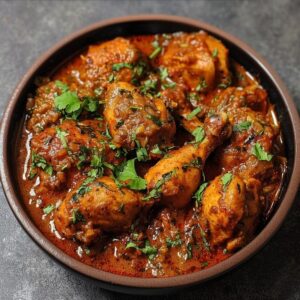
Chicken Karahi is a traditional North-Western and South Asian dish named after the deep, thick-circular cooking vessel called a “Karahi” (wok) in which it is prepared. Its defining feature is that authentic versions do not use onions. Instead, the rich, savory gravy is built entirely on tomatoes, ginger, garlic, and freshly crushed spices cooked over high heat.
Ingredients You Need
For this specific karahi chicken recipe, you won’t need any complex store-bought spice mixes. Everything is easily available in your pantry:
Chicken: 1 kg (Bone-in, cut into medium pieces)
Tomatoes: 5-6 large (Cut in halves)
Ginger-Garlic Paste: 2 Tablespoons
Green Chillies: 4-5 (Slit lengthwise)
Karahi Spice Mix: * Crushed Coriander Seeds: 1 tbsp
Crushed Cumin Seeds: 1 tbsp
Coarsely Crushed Black Pepper: 1 tsp
Red Chili Flakes/Powder: 1 tsp
Turmeric Powder: 1/2 tsp
Salt: To taste
Yogurt: 1/2 cup (Whisked smoothly)
Oil or Ghee: 1/2 cup
Fresh Coriander & Julienne Ginger: For garnishing
Step-by-Step Guide: How to Make Chicken Karahi:
If this is your first time trying your hand at this dish and you want to know how to make chicken karahi perfectly from scratch, just follow these simple steps:
Step 1: Sear the Chicken
Heat the oil or ghee in your wok (karahi) over medium high heat. Add the chicken pieces and ginger-garlic paste. Stir-fry on high heat for about 5-7 minutes until the chicken changes its color to a beautiful golden-white.
Step 2: Stem the Tomatoes
Place the tomato halves directly on top of the chicken with the skin facing upwards. Cover the wok with a lid and lower the flame to medium-low. Let it steam for 5 to 7 minutes so the tomatoes soften up.
Step 3: Remove the Skin
Remove the lid. Using a pair of tongs, gently peel off the loosened tomato skins—they will slide off easily. Use your wooden spoon to mash the softened tomatoes directly into the chicken.
Step 4: Spice It Up and Bhunno
Now turn the heat back to high. Add your salt, red chili, turmeric, crushed coriander, and cumin. Pour in the whisked yogurt. Stir and sauté continuously (bhunno) on high heat until the moisture evaporates and the oil separates from the gravy.
Step 5: The Final Touch
Once the gravy is thick and glossy, add the green chillies and the coarsely crushed black pepper. (Pro-tip: Always add black pepper at the very end to prevent your karahi from turning an unappealing dark color). Simmer on low heat for 2 minutes.
FAQs: Common Questions About Cooking Karahi:
Q1. Can I add onions to a chicken karahi?
Ans: Traditional and authentic restaurant style chicken karahi does not use onions. Adding onions creates a sweeter, smoother gravy base, which completely changes the classic sharp and tangy flavor profile of a real karahi.
Q2. Why is karahi cooked on a high flame?
Ans: High-heat cooking (stir-frying) flash-cooks the chicken, locking in its natural juices so it stays tender on the inside while allowing the spices and tomatoes to caramelize beautifully without getting mushy.
Q3. How can I reduce the spice level if it gets too hot?
Ans: If your karahi turns out too spicy, you can easily balance the heat by stirring in 2-3 extra tablespoons of whisked yogurt or a splash of heavy dairy cream right at the end.
Leave a Reply